ARISTOTLE (384 - 322 BCE)
0. Biography
- 384 - 322 BCE
- Father Nicomachus — court physician; orphaned young, raised by a guardian
- Joined Plato's Academy ~age 17; stayed ~20 yrs, until Plato's death (347 BCE)
- Metic in Athens — never full citizen/property rights
- Assos/Mytilene period — biological fieldwork; married Pythias, daughter Pythias
- Later partner Herpyllis (likely slave/freedwoman) — son Nicomachus
- Tutored Alexander the Great at Macedonian court under Philip II
- Founded the Lyceum, Athens, 335 BCE
- Anti-Macedonian backlash after Alexander's death (323) → impiety charge → fled Athens, echoing Socrates ("won't let Athens sin twice against philosophy")
Overarching Trajectory
- Today's readings draw on Aristotle's biology (Generation of Animals, History of Animals, Parts of Animals), his ethics and politics (Nicomachean Ethics, Politics), and his psychology (De Anima), to trace one continuous argument for women's inferiority running from body, to soul, to moral and political status. (Psychology is from psuche, or soul, so in this case it is his theory of the soul.)
- His Natural biology (critical empiricism) is grounded in his theory of the soul (psychology), and is used to justify the ethical/political system using circular logic: origin and cause are inverted where the ethical/political system is the starting point and is imported into his empiricism and psychology.
- Essentialism via Naturalism
I. Misogyny is tool
A. Aristotle is a misogynist — not in question
- Spartan women critique (Politics II) shows it's not indifference alone; he has actual animus when women deviate from the Athenian model
B. But women aren't his main focus — slavery is
- Aristotle = conservative thinker: want to prove the existing order, doesn't question it (Okin, Tuana)
- Gods no longer justify hierarchy (post-mythos, nature-based philosophy) → need a new justification for some men ruling others:
- ruler/ruled inaugurates the state

- Follow the money/appropriation: slavery = appropriation of life-force, labor, the most unique resource a person has
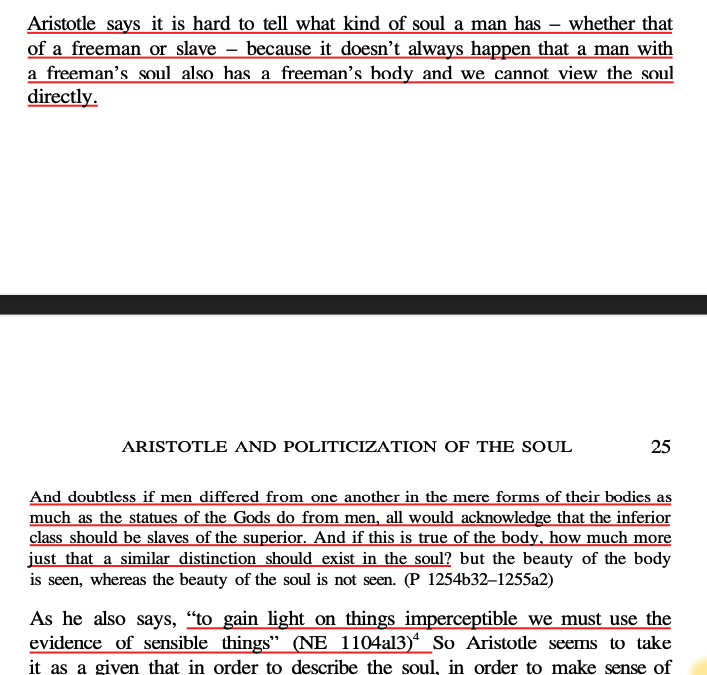
C. The evidentiary problem with slavery
- Claim: some souls superior to others — but soul is invisible, unverifiable ("can't look within," per Spelman)
- No reliable bodily marker distinguishes "natural slave" from free man (modern slavery fixes this by adding racism to naturalization, c.f., Colette Guillaumin)
D. Sexual difference solves the evidentiary problem
-
Reproductive difference/generation is visible, bodily, undeniable
-
Aristotle defines man and woman relative to this goal: to reproduce in another vs. to reproduce in onself.
-
Unlike the soul, sexual difference can be pointed to, "read" off the body
-
Aristotle isn't developing separate arguments for women and slaves; he's running one argument (the rational/irrational soul-hierarchy translates into political rule) across multiple classes at once: men over women, masters over slaves, fathers over children
-
Establish inferiority-by-nature on the visible case (sex) → transfer the same logical structure to the invisible case (slavery)
-
Everyone already agrees women are inferior "in every way," that consensus becomes leverage: well, slaves are inferior too
-
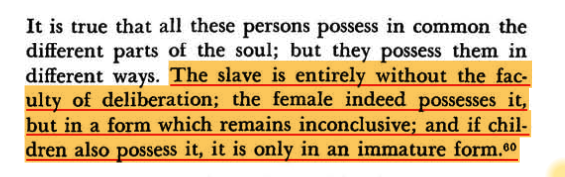
Important difference: women have deliberative capacity, but it is without authority; slaves cannot deliberate, but only understand and obey master.
-
By volume, his obsession is with slavery, not with women: Aristotle devotes the bulk of Politics Book I to defending natural slavery
II. Tuana — Biology → Metaphysics → Ethics
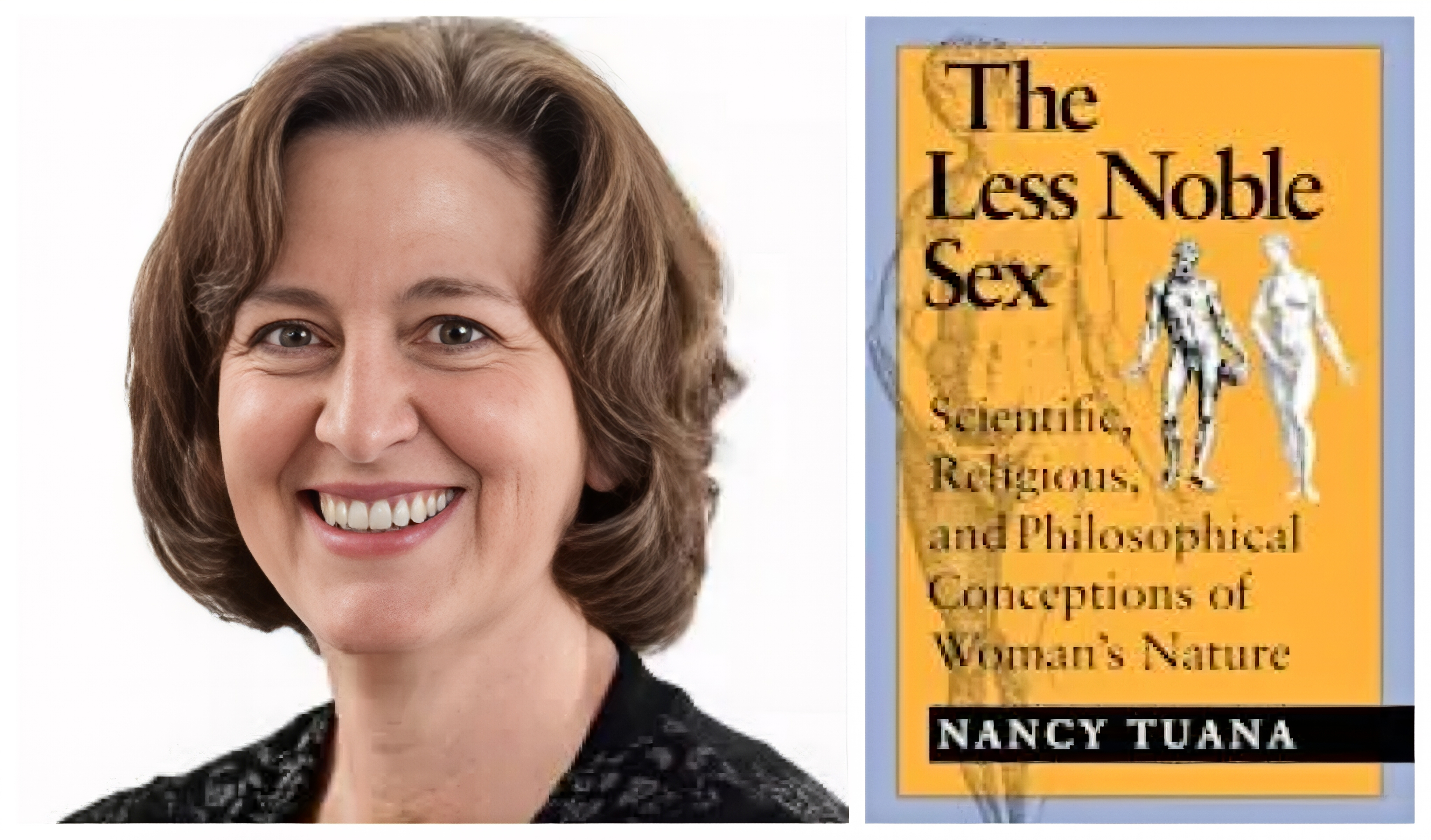
- Nancy Tuana: American philosopher of science and feminist philosophy; taught at U Penn from 1984, then University of Oregon, then Penn State (2001–present) as DuPont/Class of 1949 Professor of Philosophy & Women's, Gender, Sexuality Studies; founding director of Penn State's Rock Ethics Institute.
- Key works: The Less Noble Sex (1993, Indiana UP) — source for today's biology/metaphysics/ethics material; series editor of Re-Reading the Canon (Penn State Press, 30+ volumes) — the anthology series anchoring your whole seminar; longtime co-editor of Hypatia: A Journal of Feminist Philosophy.
A. Biology: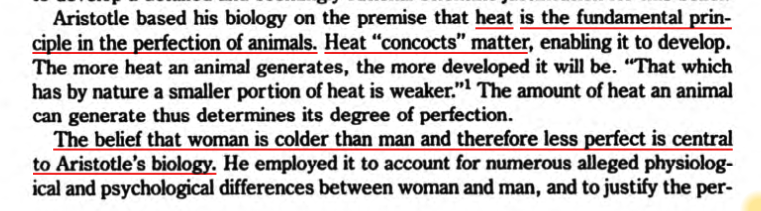
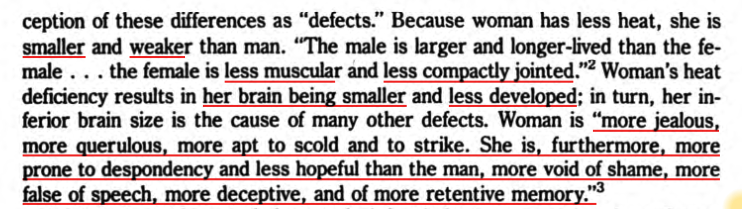
- Heat = concoction; woman = colder → less perfect
- Semen (concocted blood) vs. menses (unconcocted) — "proof"

- Woman = misbegotten / mutilated male, deviation
- Untested claims: maternal age affects fetus sex, quickening (40/90 days) slower for females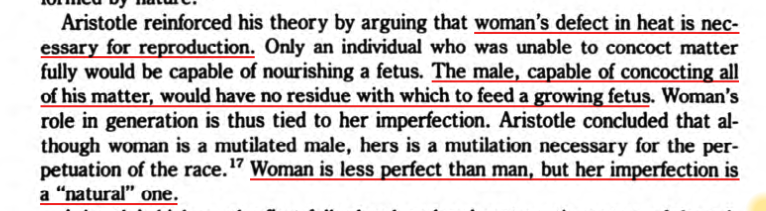
B. Physics/Metaphysics — soul, form/matter
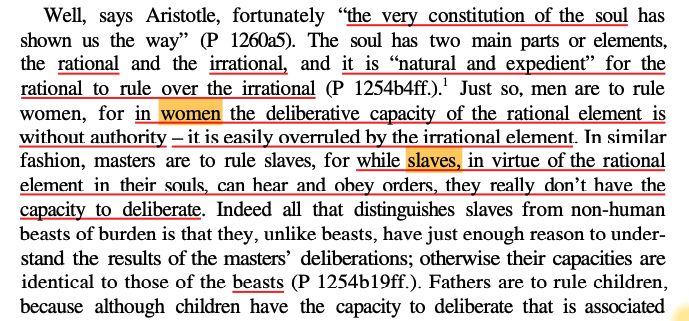
- Heat determines faculties; woman's intellect "without authority"
- Generation: man = form/soul; woman = matter only
C. Ethics
- Justice = the human trait; requires reason ruling passion
- Woman's reason lacks authority → passions ungoverned
- Slave lacks even deliberation, more like a beast of burden
II. Spelman — Politicization of the Soul
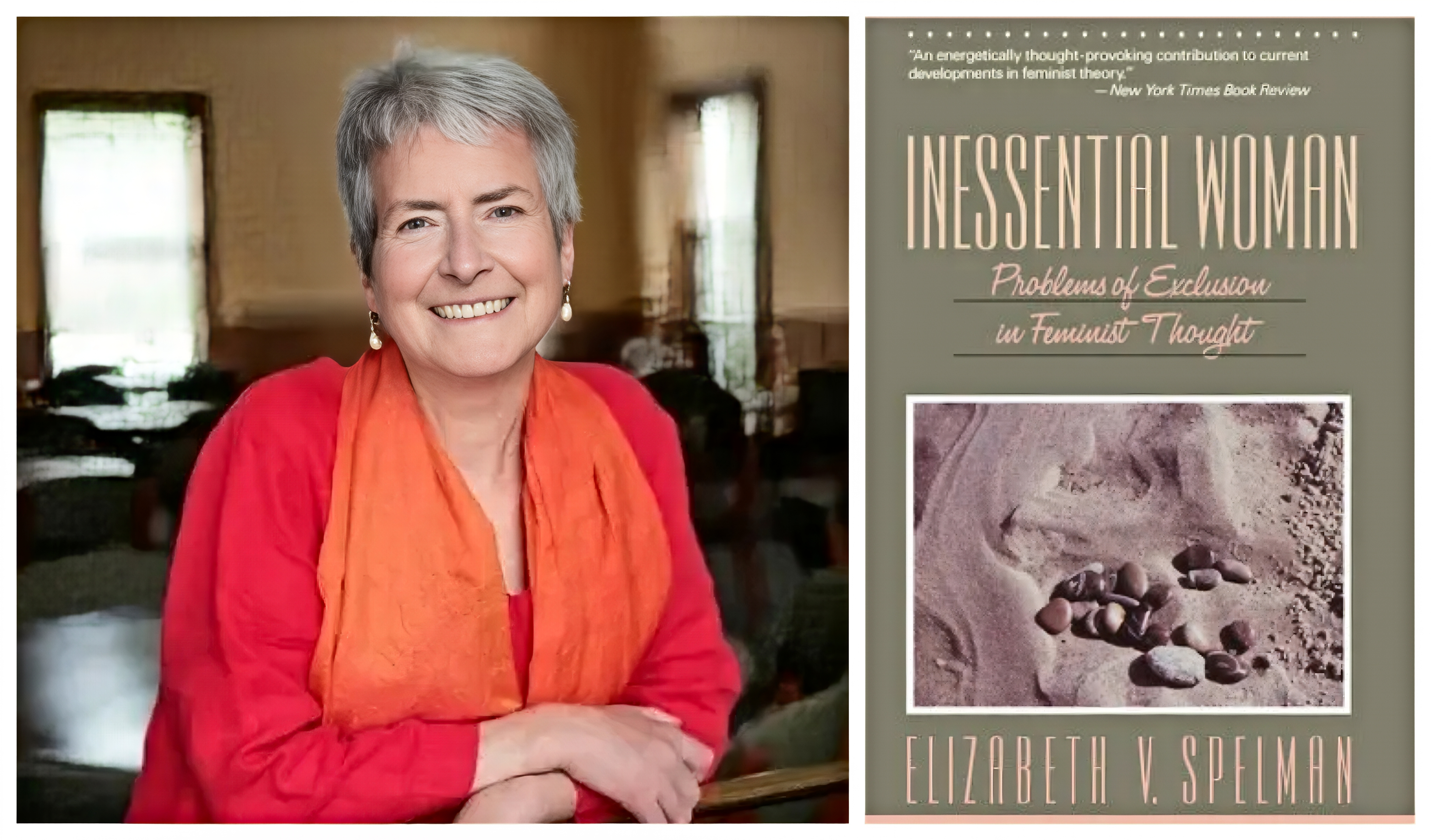
- Elizabeth V. "Vicky" Spelman (1945–2025): BA Wellesley (1966), PhD Johns Hopkins (1974); taught at Amherst and Carleton before joining Smith College (1982–2024), where she held the Barbara Richmond 1940 Chair in the Humanities; died December 26, 2025.
- Key works: "Aristotle and the Politicization of the Soul" (today's reading); Inessential Woman: Problems of Exclusion in Feminist Thought (Beacon, 1988) — argues feminist theory itself often erases race/class differences among women, treating white middle-class experience as the default "woman"; also Fruits of Sorrow (1997), Repair (2002), Trash Talks (2016).
A. Argument: rational rules irrational (soul) → men rule women (polis)
- Same schema: men/women, master/slave, father/child
- "Despotic/constitutional/royal" rule; child/tutor; master/servant
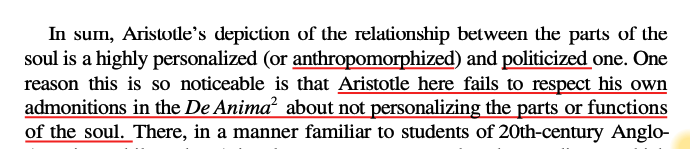
- Violates own De Anima rule (don't personify soul-parts)
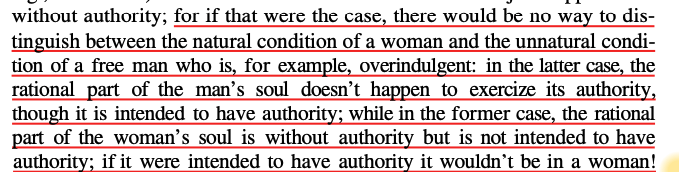
C. Contradiction (applying to women)
- (a) rational has authority by nature
- (d) women: rational lacks authority
- (d) denies (a) → "women by nature unnatural"

- Unable to distinguish between woman and incontinent man
D. Circularity
-
Metaphysics built from the politics it "proves"

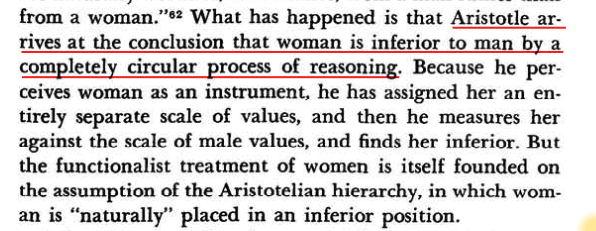
- What is sexist isn't the division between rational and irrational, but the assigning of rationality to male and irrational to female.
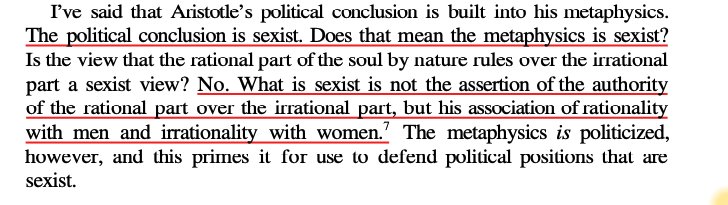
- What is sexist isn't the division between rational and irrational, but the assigning of rationality to male and irrational to female.
-
The argument doesn't "work" (logically, maybe)


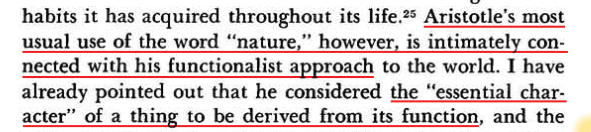
**III. Okin — Aristotle's "Nature" is tied normatively to his Functionalism
- Susan Moller Okin (1946–2004): NZ-born liberal feminist political philosopher; BA Auckland, MPhil Oxford, PhD Harvard; taught at Brandeis and Harvard before Stanford (Marta Sutton Weeks Professor of Ethics in Society).
- Key works: Women in Western Political Thought (1979) — Plato-to-Mill critique, source for today's Aristotle material; Justice, Gender, and the Family (1989) — feminist reworking of Rawls. Is Multiculturalism Bad for Women? Controversial.
A. Method: justify status quo, not critique (vs. Plato)
- Soul = function (axe/eye) → extended to whole beings
- Hooks into Heideggerian/Irigaray/Butler critique of teleological thinking and substance metaphysics
B. Teleological hierarchy — nature makes nothing in vain
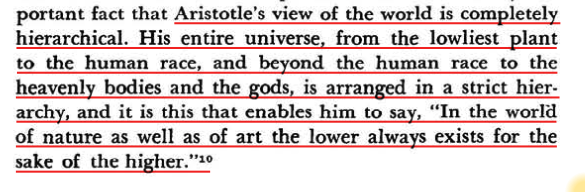
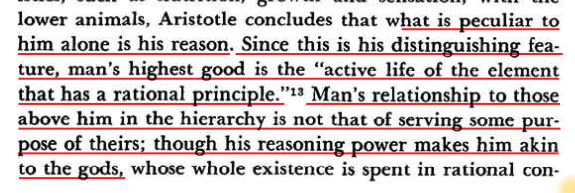
- Plant→animal→man→gods; man's function = reason
- Man is closest to the Gods

- A small portion of acorns become oak trees; a very small portion of men get to flourish
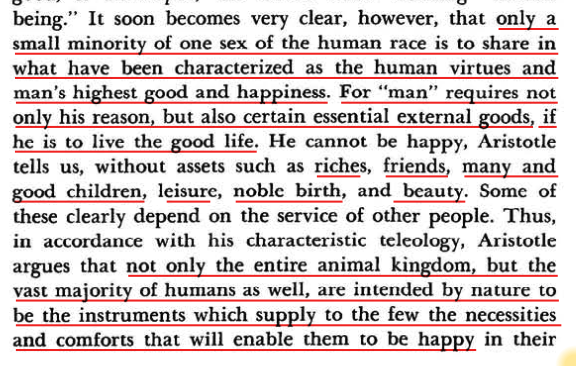
- Happiness needs "instruments" (women, slaves) → most humans are means
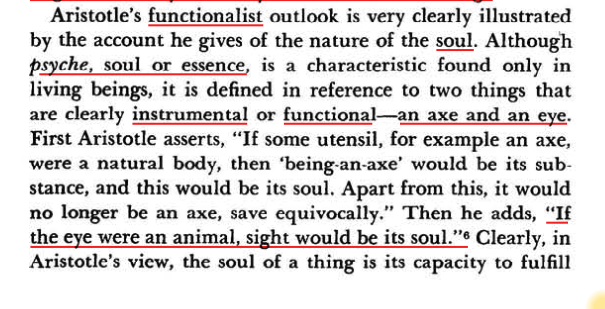
C. "Nature" = normatively loaded
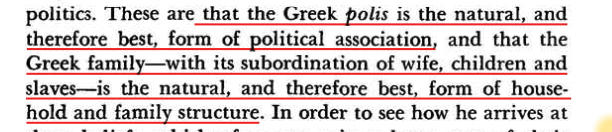
- Nature of X -> function of X -> good of X (status quo is self-justifying)
- Correlates to Tuana's Biology -> metaphycics -> ethics/politics (normative)
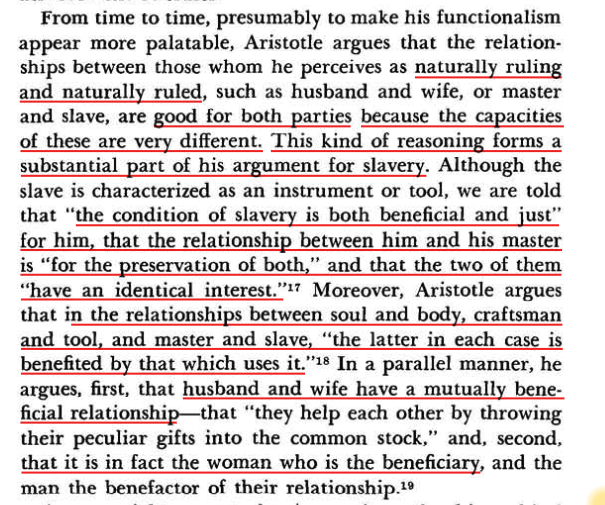
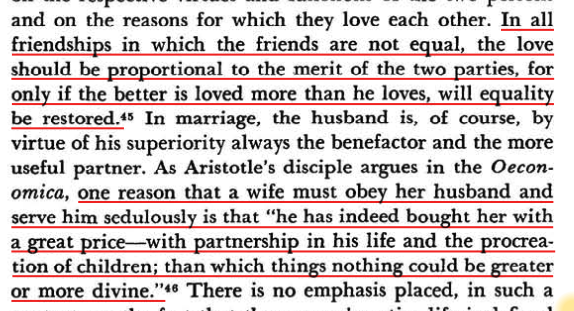
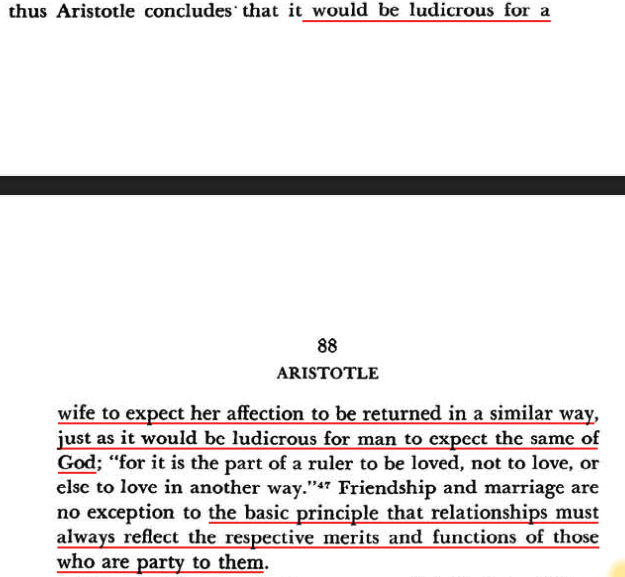
D. Woman's function = reproduction (matter only) + household mgmt. She is the beneficiary.
E. Reception history
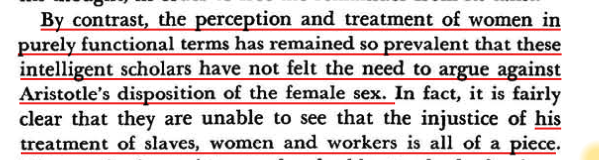
- Ross/Allan/Lloyd: reject slavery argument, ignore same move re: women

- Double standard, not Aristotle's multiple one
Coda — Heidegger / Irigaray (gesture only, not full unit)
A. Heidegger: Western ontology modeled on the made thing (axe/craftsman)
- Being-as-production → blind to Dasein (care, disclosedness, temporality)
- NOT gendered by Heidegger himself — flag this
B. My own move: arche (origin) → aitia (cause) — reversal Aristotle doesn't see himself performing
C. Form/matter genealogy: chora (Plato) → hyle/hypokeimenon (Aristotle) → soul/body → male/female
D. Irigaray
- Physics IV, "Place, Interval" — topos as disavowed maternal function
- Forgetting of Air — critiques Heidegger too
- Same critic as Plato's "Sorcerer Love" → throughline across sessions
E. Symposium link: Diotima's ladder — physical begetting (via woman) < spiritual begetting (via men) — same structure as Aristotle's soul/matter split
F. Butler, Bodies That Matter (ch. 1) — engages Irigaray on hylomorphism directly
G. Vulnerability point (response to Elissa)
- Body disparaged = seat of vulnerability, permeability
- Recoil from vulnerability → worse than death = subjection to inferior ruler
- Motivates philosopher-kings: rule or be ruled by the stupid — "natural and unjust" alternative