Reading and Pulling Quotes Into Obsidian Reading Notes
This post is part of a series detailing my reading, note taking, and preparing to lecture on topics in feminist philosophy for the Feminist Romp Through the History of Philosophy.
Reading Preparations
This first thing I do with a piece is quickly read over it. The first read is more like a scan - I'll read the first couple paragraphs, look at the structure of the piece, see if there are any subsections and headings, and read the last few paragraphs. This first warm up reading is just getting the lay of the land, and I will often do this with a handful of essays at the same time because part of what I'm trying to decide is where to dive in first. I will have to do a separate post on how I do the research to identify a set of materials in a given topic. With the Romp, I decided early on to use the Penn State Re-Reading the Canon Feminist Interpretations of series edited by Nancy Tuana, so I already knew where to go looking first...
Once I get hooked into a piece, I settle in to read it for reals. I might put on some focus music, use text-to-speech to hear the piece as I read it through. Eventually I'll come across a sentence that seems prescient or important, and I'll underline or outline it. (At this point, any text-to-speech would be stopped, because it's hard to stop and start it while underlining.) Sometimes I do one full reading before beginning to outline, sometimes I start to outline right away. It kinda depends on how much time I have.
Marking Up the Text
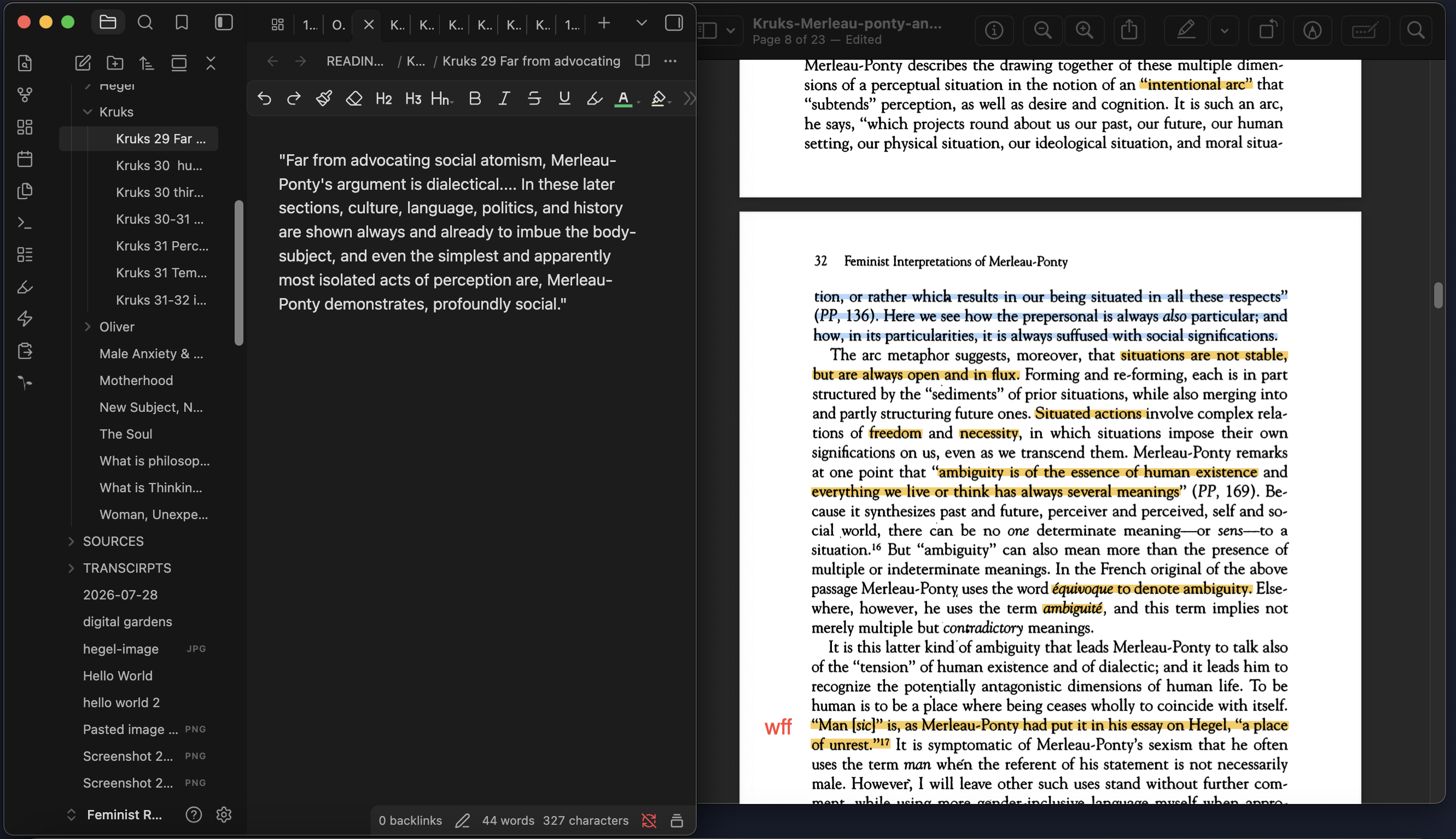
Underlining is one type of mark among many. Over the years, I have developed a shorthand to mark up the text, but I haven't fully transferred that system over to reading something digitally as opposed to physically. Still working on that one.

For example, in the image, you'll see "WFF" which stands for Well-Formed-Formula. This is a term I borrowed from logic, and I use it to indicate a phrase that is particularly well written.
I could tell you my marks, but I believe that each of us should develop our own set of marks that make sense to us. It's part of the fun, developing your own annotations. Here are some examples of common marks:
- asterisks
- exclamation marks
- circle
- arrows
- numbers
- question mark
- abbreviations (like my "wwf")
- plus sign
Creating Reading Notes
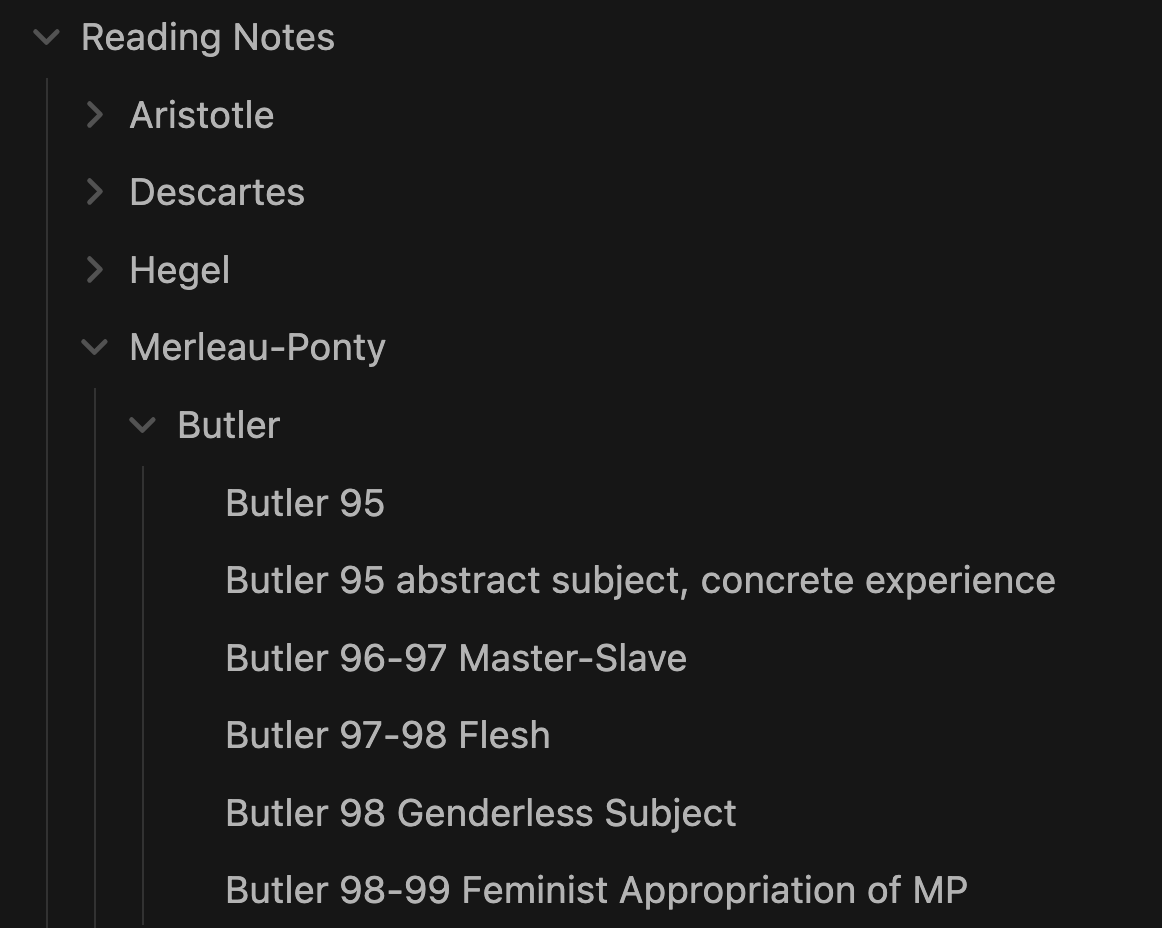
I might make a couple passes this way, but eventually I will feel that I caught all the important points, and the next task is to pull the quotes and put them each onto a Obsidian Note. My naming convention is:
- AuthorName_PageNumber_DescriptorBlurb
- Butler 95 abstract subject, concrete experience
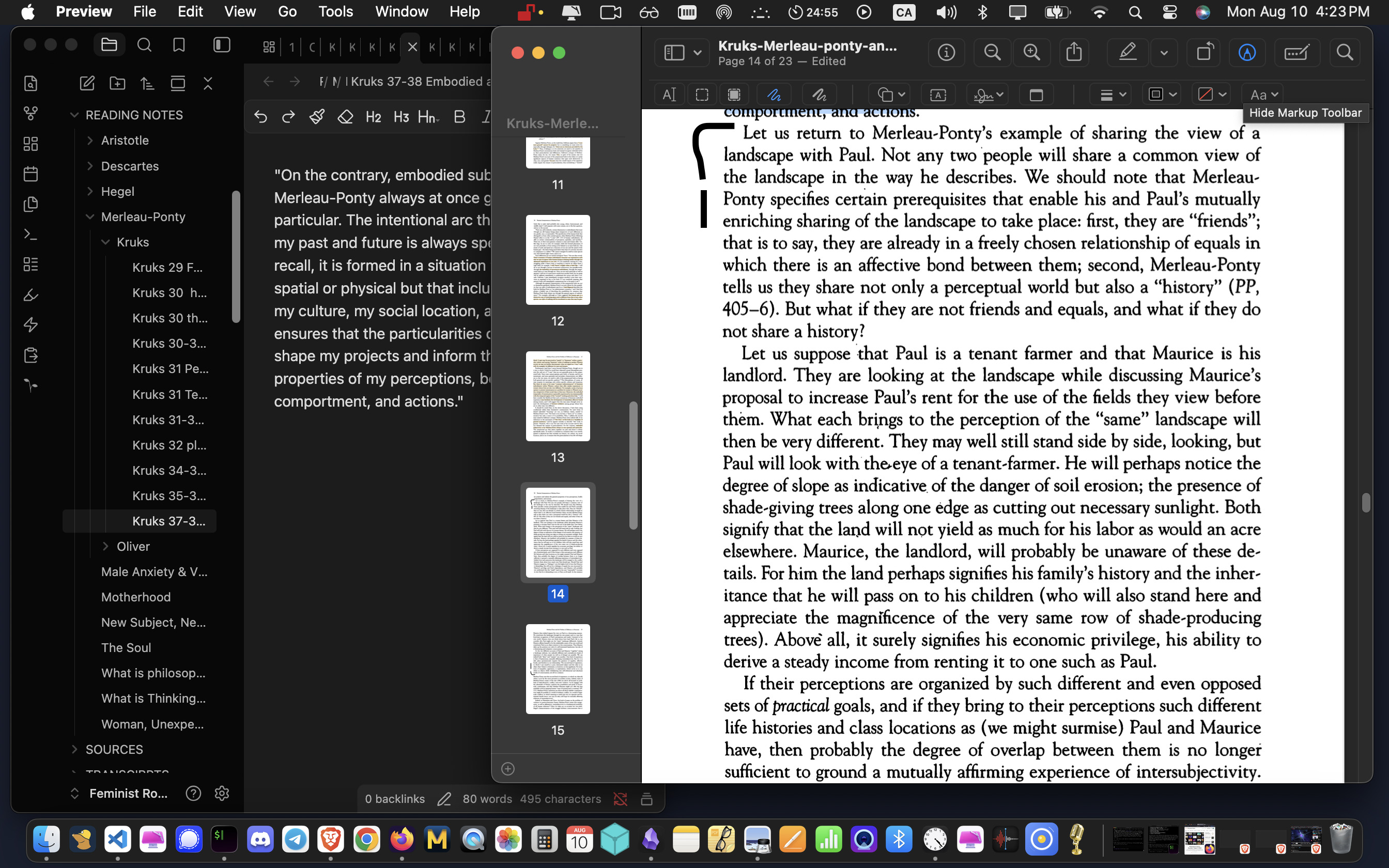
At this point I will just collect the quotes. Latter I will annotate them and then organize them into some sort of flow. (By "annotate" I mean embed those quotes into a new note and add my summary in my own words, and why the quote is important or interesting to me in particular. I may be tracking a term or idea, and this is where I might mention how this quote speaks to my ongoing interests.) I find it best to grab a quote with it's context, so will often grab the whole paragraph. or at least a few sentences around it.
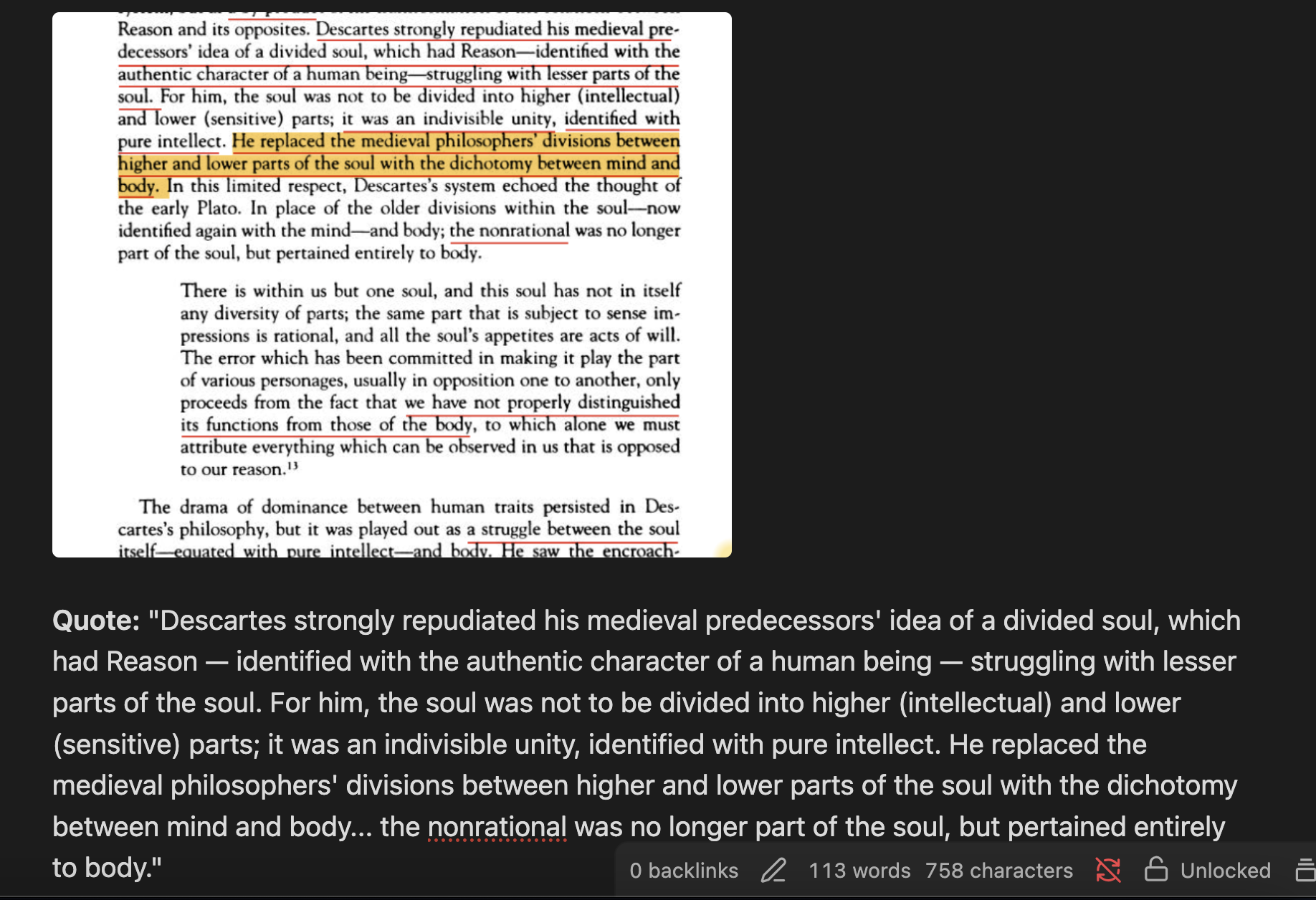
I have tried capturing the quotes as screenshots of the documents (that is, as images), and as copy and pasted quotes. I think I prefer the screenshots because it retains the visual reference to the text I read, but it's also handy to have the text from the quotes. Here is a note that incorporates both approaches, and maybe that would be the ideal:
I am still experimenting with this - let me know if you have a preference, or how you do it if you end up trying this.
I will collect many more quotes than I end up annotating. Some quotes turn out to not be that important, in the end. As I identify a flow and a line through the text(s), some quotes may not fit that trajectory. Sometimes there will be quotes that repeat an idea, and I'll group them and annotate them together. For many reasons, not all the quotes will be immediately useful. But we are creating a long term system, and ideas may end up meeting up with other ideas in the future.
08/18/2026
I think I found an even better solution for pulling quotes and annotating. Obsidian has a ton of community plugins that I'm just getting into, and one of these allows us to easily annotate pdfs, so I will demo this next....